
Residence in Spain: How to Move Your SEO Projects to the Sun and Automate Your Accounting


 5. March, 2026

Spain, for an SEO specialist in 2026, is much more than jamón and paradise coastlines. It is a strategic choice for scaling your business. When your working day is measured not in office hours but in organic traffic, lead quality and SERP positions, the question of “where to live” turns into “where will I feel better creating and growing”.
Moving under the Spanish sky means a shift in both financial and lifestyle paradigms. In the past, choosing a place to live while working remotely from Spain often turned into an odyssey of “finding stable Wi-Fi”, but those days are gone. Today Spain has made a huge leap forward: high-speed fiber internet and 5G have become the de facto standard. You no longer need to limit yourself to large cities just because of internet access - high-speed connectivity is available almost everywhere, except in very remote mountain villages. Choose your home for its atmosphere, not for the router.
Legalization: from “tourist” to resident in Spain
The first barrier that scares many people is bureaucracy and obtaining residence in Spain. If you are not an EU citizen, your “golden ticket” is the digital nomad visa in Spain. It allows you to legally work from Spain while keeping contracts with foreign companies. The process of obtaining Spanish residence requires understanding certain algorithms - almost like Google’s - but with the right preparation it becomes completely predictable.
Many colleagues from the EU - Latvia, Poland, Germany - often fall into the trap of the “eternal guest”. They come to Valencia or Málaga for a couple of months, try remote work from Spain and then realize they do not want to return to gray everyday life. At that moment the decision to relocate to Spain permanently becomes final.
Once you obtain your residence permit in Spain, you enter the radar of the tax authority. As individuals, autónomos are subject to specific tax obligations in Spain, including keeping mandatory accounting records and submitting periodic income tax declarations. For SEO specialists and owners of small agencies, the optimal path is the autónomo status, meaning self-employment. Depending on the tax regime (direct estimation or objective estimation), accounting and tax obligations may vary. In addition, autónomos must pay a monthly contribution to the social security system in order to maintain their status.
The accounting pain for autónomos: subscriptions and automation
A typical SEO specialist is a collector of subscriptions: Ahrefs, Semrush, ChatGPT Plus, proxies, servers and so on. In traditional Spanish accounting this often became a headache because invoices had to be collected and manually sent to an accountant.
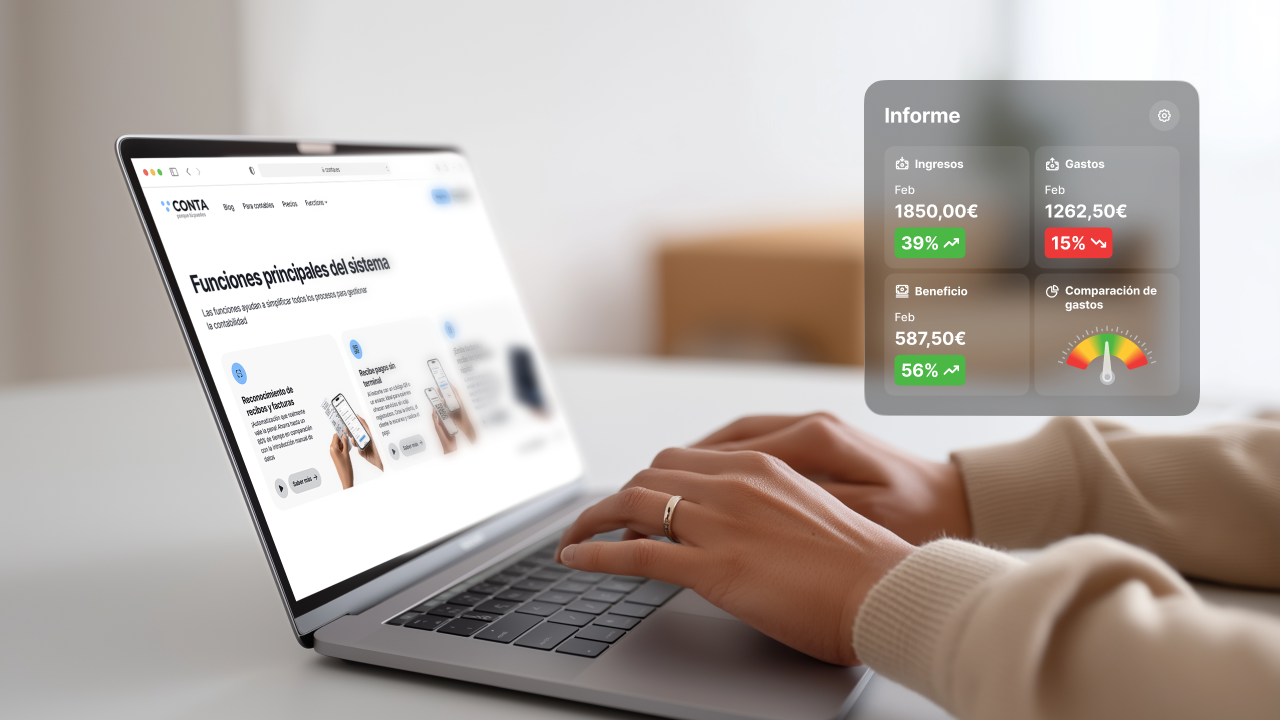
At Conta.es we created a system that speaks the same language as an IT specialist. Conta.es is a tool designed for autónomo accounting that simplifies the management of products, invoices, income and expenses. The main functions of the software include issuing invoices, tax reporting and organizing accounting records, optimizing every administrative task.
Upload in one click. Received an invoice from OpenAI or a server bill? Simply upload the PDF to the system. It automatically extracts the date, supplier NIF and amount. These deductible expenses for autónomos immediately appear in your reports.
International invoices. Working with clients from the United States, the United Kingdom or the Baltic countries? The system correctly applies the reverse charge VAT mechanism (0%) so that you do not overpay when working remotely from Spain.
Tax obligations: what every autónomo should know
Becoming an autónomo in Spain means taking on a number of obligations with the Agencia Tributaria that go far beyond simply issuing invoices or declaring income. Accounting for autónomos is the foundation of a business’s financial health and compliance with tax legislation. Maintaining an organized record of income, expenses and invoices is essential to avoid errors and penalties.
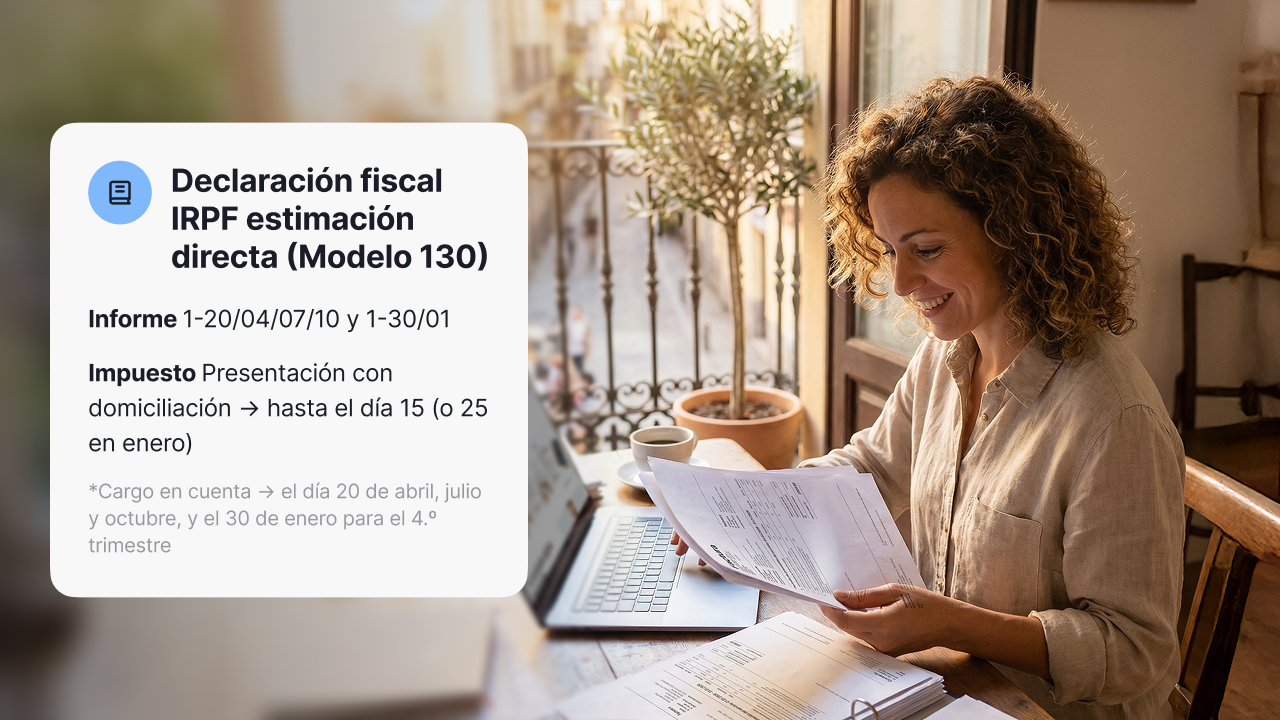
An autónomo must record all economic operations in mandatory books: the income book, the expenses book and the register of issued and received invoices. These records form the basis for correctly calculating taxes and submitting required tax forms such as Modelo 303 for VAT and Modelo 130 for personal income tax. Controlling and organizing this data not only ensures compliance but also gives a clear understanding of the financial state of your business.
The tax authority requires regular submission of declarations, timely payment of taxes and keeping accounting records up to date. Failure to comply with these obligations may result in financial penalties and legal issues, which is why it is important to always stay aware of your tax responsibilities.
This is where accounting software for autónomos becomes your best ally. Such software allows you to automate financial management, easily record income and expenses, issue professional invoices and generate detailed reports about your business performance.
Having an accountant or a specialized accounting system adapted to autónomos helps fulfill all legal obligations, carefully monitor operations and efficiently prepare tax forms. This allows you to focus on growing your business rather than dealing with paperwork.
Ultimately, the key to successful accounting management as an autónomo lies in organization, using the right tools and strictly complying with Agencia Tributaria requirements. Use technology to simplify your daily work, reduce errors and always keep control of your professional activity.
Your master key: certification and the Certificado Digital
To avoid going from office to office and waiting in lines, it is essential to obtain a digital certificate. It is your electronic signature in Spain, without which the life of an expatriate in 2026 is almost unimaginable.
How do you obtain it and what is it used for? Registering the certificate usually takes from a few days to a week. You must apply on the FNMT website and then confirm your identity once in person at the nearest Seguridad Social or Ayuntamiento office. With this “digital key” you will be able to:
- forget about paper mail and communicate with the tax authority and social security online
- request your employment history report and see your social contribution history in real time
- monitor how your work history and pension rights are being formed
It is a mandatory attribute for any freelancer in Spain who values their time.
You can read more about the digital signature here.
Why Conta.es means peace of mind in invoicing and a “No Stress” rhythm
The tax authority will not fine you for an unrecorded expense - it actually benefits them because you will pay more taxes. But transparency in your accounting is your best protection.
At Conta.es we focus on a clean interface and clarity:
Smart classification. You only need to choose a category - for example “Professional services” or “Software licenses” - and the system automatically links the operation to the correct tax codes.
360° transparency. In the dashboard you see the real picture of your business: gross income and net profit that will remain after quarterly IRPF payments. No unpleasant “disappearing money” surprises at the end of the quarter.
Spain is easy if you treat it that way. It is not a myth if you have the right software at hand and adapt to the local mindset: not everything happens instantly here, and that is part of the charm. Spain gives you the climate and the sea, while Conta.es takes care of the technical routine of autónomo accounting management so that you can focus on conquering the TOP 1 positions in search results for your clients.
Want to try how automated accounting works for the self-employed in Spain? We currently offer a 60-day free trial in Conta.es. You can start with creating invoices. The system will begin tracking your income automatically, and you will only need to add expenses using the document scanning function by uploading invoices and receipts. Based on this data, the system will start generating reports ready for the tax authority.