
Self-employed in Spain: Introductory guide for freelancers and independent professionals


 5. March, 2026

Working as a self-employed professional in Spain involves a number of obligations and advantages that must be considered in order to manage a business effectively and comply with current regulations. In this comprehensive guide we will analyze the registration process, the importance of accounting, as well as modern tools that simplify the management of your business activity.
What is a self-employed professional?
A self-employed professional is a person who regularly, personally and directly carries out an economic activity with the intention of generating profit, without being bound by an employment contract with an employer. In Spain, self-employed workers are required to register in the Special Regime for Self-Employed Workers (RETA) in order to contribute to Social Security and gain access to social benefits.
Registration as self-employed: steps and requirements
To register as self-employed in Spain it is necessary to complete several important steps:
- Age: The minimum age for registration is 18 years, although there are exceptions for members of cooperatives from the age of 16.
- Registration with Social Security: It is mandatory to register in RETA, indicating the economic activity and selecting the contribution base depending on the estimated annual income.
- Registration with the Tax Agency (Hacienda): It is necessary to submit the declaration of the start of activity using forms 036 or 037 and register for the Economic Activities Tax (IAE).
- Registration deadline: Registration can be completed up to 60 days before the start of the activity.
Completing these procedures is a mandatory requirement in order to work legally and obtain social guarantees.
The importance of accounting for self-employed professionals
Accounting is a key element in managing any business, including the activity of self-employed professionals. It allows you to:
- Control finances: Keep records of income and expenses to understand the real financial situation of the business.
- Make informed decisions: Obtain financial reports for planning and developing business activities.
- Comply with regulations: Prepare and submit tax declarations correctly.
- Optimize management: Organize information to reduce risks and improve efficiency.
Self-employed professionals usually keep their accounting using a double-entry bookkeeping system, which ensures accurate recording of all operations.
Tax obligations and Social Security contributions
Self-employed workers must independently manage their taxes and contributions:
- RETA contributions: Calculated as a percentage of the selected contribution base, which depends on estimated annual income. There are minimum and maximum contribution bases.
- Bonuses and reductions: For example, the "tarifa plana", which is a reduced contribution rate during the initial stage of activity.
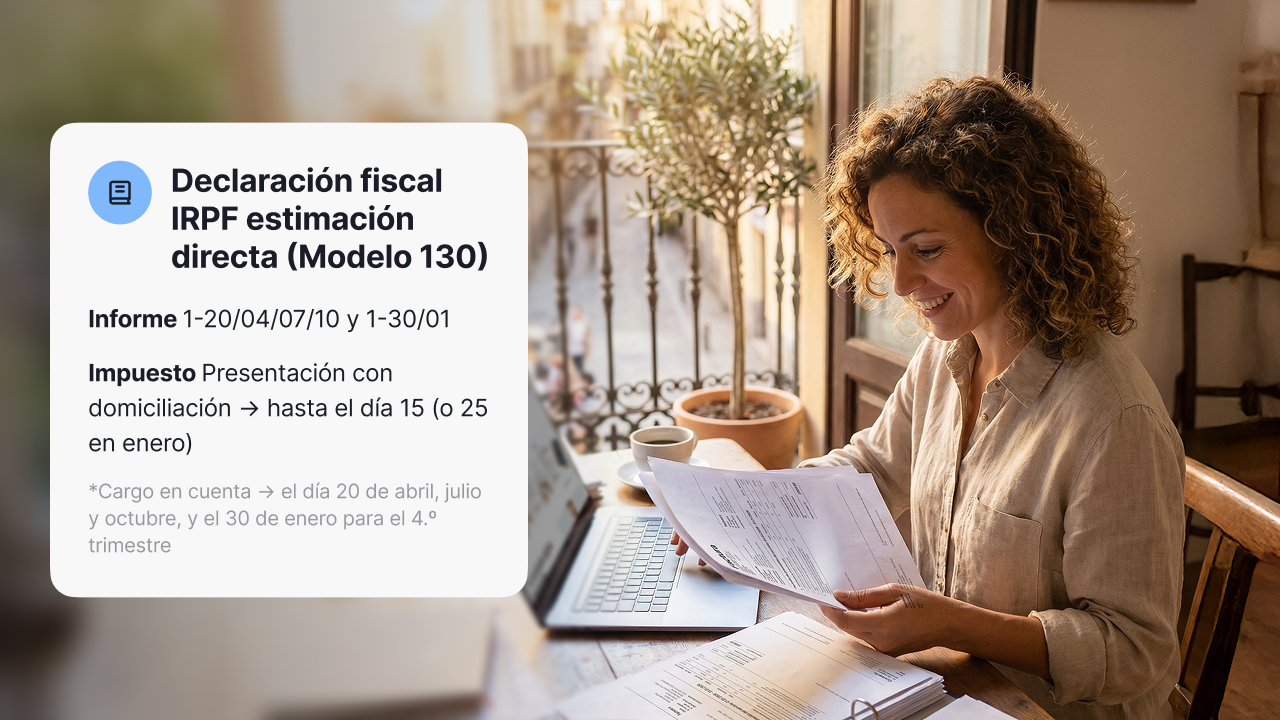
- Tax declarations: Periodic declarations such as model 303 (VAT), model 130 (income tax), and others must be submitted.
- Liability: The self-employed person is personally liable with all personal assets for debts related to their activity.
Timely compliance with these obligations helps avoid penalties and legal issues.
Modern tools for accounting and invoicing
Technology significantly simplifies the work of self-employed professionals:
- Cloud accounting platforms: Allow accounting to be managed from anywhere with automation and report generation.
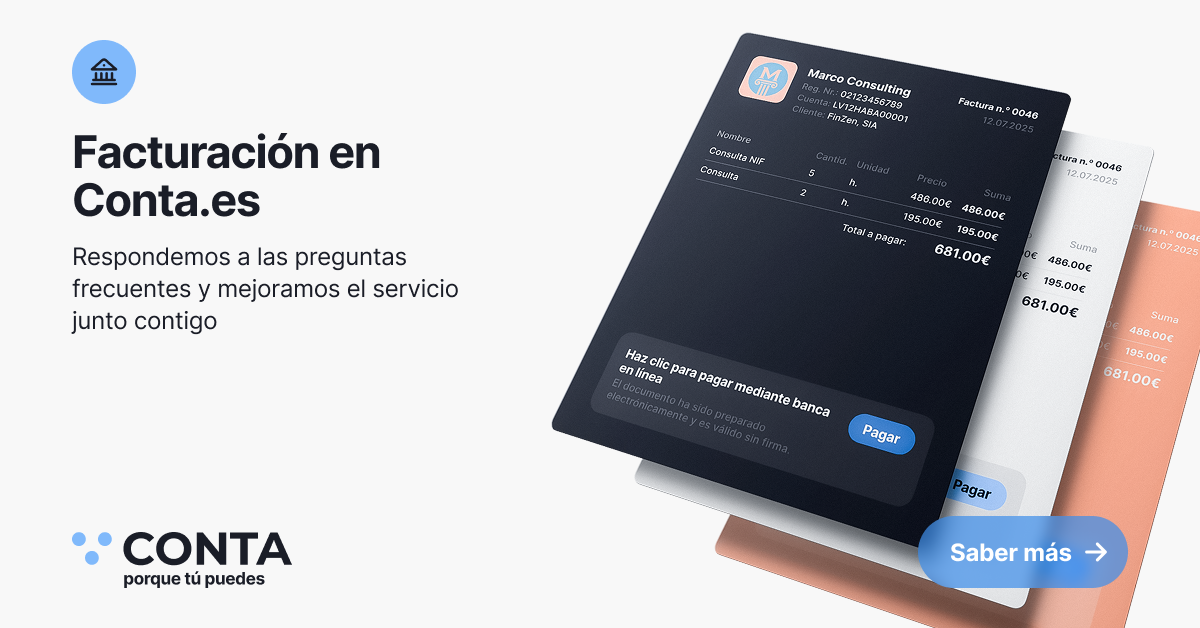
- Electronic invoicing: Creation and sending of personalized invoices via email with payment status tracking.
- Bank integration: Automatic synchronization of transactions for accurate income and expense tracking.
- Financial analysis: Modules that evaluate expense structure and identify opportunities for optimization.
Using these solutions saves time, reduces errors and improves business management.
Conta.es - cloud platform for self-employed professionals
Conta.es is a SaaS accounting platform designed specifically for self-employed professionals in Spain. It helps automate:
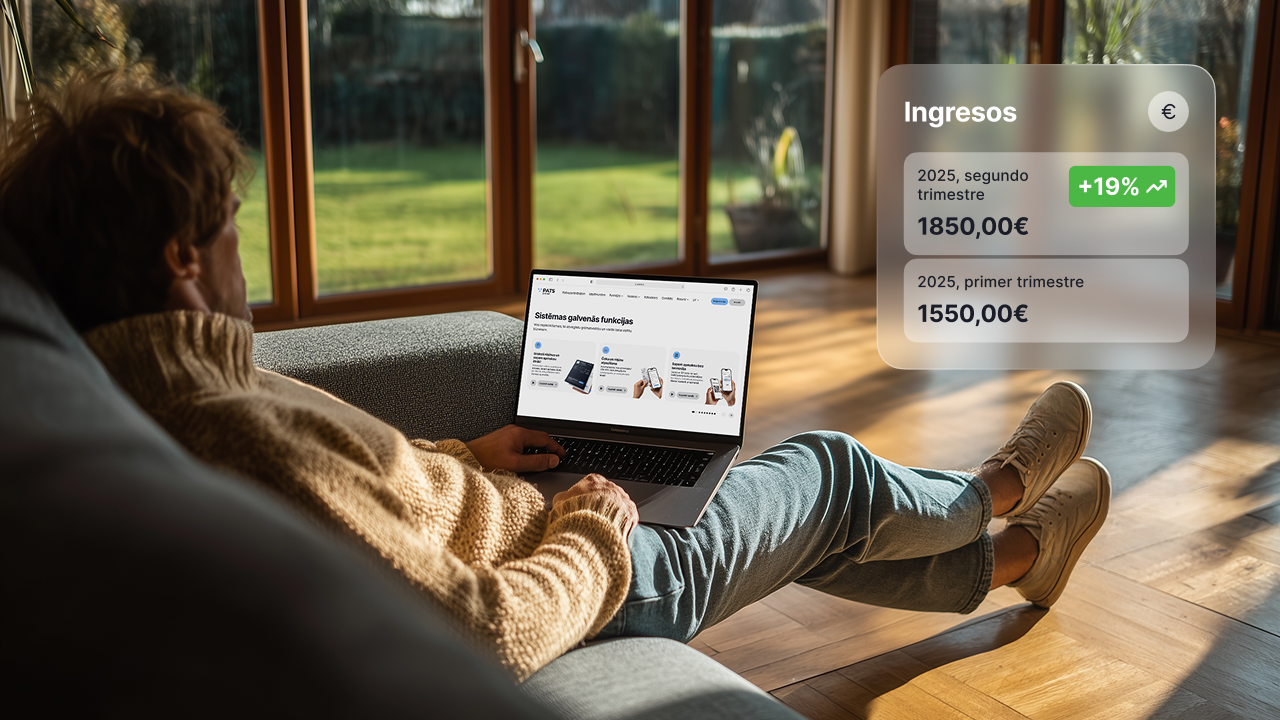
- Income and expense tracking
- Invoice creation and sending (including PDF and online versions)
- Receiving online payments through integration with licensed payment providers
- Synchronization of bank transactions via PSD2
- Preparation of tax reports (models 130, 303, 111 and others)
- Monitoring of tax deadlines
- Analysis of income and expense structure using an AI-based module
The platform supports four languages (Spanish, Romanian, English and Russian), which is particularly useful for migrants and international professionals. Conta.es does not provide legal advice and does not automatically submit declarations, but it significantly simplifies accounting, reduces the risk of mistakes and helps comply with tax deadlines.
CONTA.ES is designed to cover the most common tax situations of self-employed professionals in Spain, allowing automated and secure management of accounting, taxes and periodic obligations.
Currently the application supports the following regimes:
- Self-employed professionals under the simplified direct estimation regime for personal income tax (IRPF)
- Self-employed professionals under the general VAT regime in the common territory
- Self-employed professionals operating in mainland Spain and the Balearic Islands, excluding the foral territories of the Basque Country and Navarra and territories outside the VAT scope (Canary Islands, Ceuta and Melilla)
Social benefits and support for self-employed professionals
Although social guarantees for self-employed workers may be more limited than for employees, they include:
- Healthcare and pensions through the Social Security system
- Temporary disability benefits (limited)
- The right to apply for the Minimum Vital Income (Ingreso Mínimo Vital) if vulnerability conditions are met
It is important to stay informed about available benefits and submit applications on time.
Advantages and challenges of working as self-employed
Working as a self-employed professional offers:
- Freedom and flexibility: Independent time management and project selection.
- Possibility to increase income: Direct control over the results of your activity.
- Autonomy in management: Full control over business and decision-making.
However, there are also challenges:
- Full responsibility for debts and obligations
- Managing accounting and tax obligations
- Unstable income and lack of paid vacation
Becoming self-employed is only the first step
Becoming and working as a self-employed professional in Spain offers the opportunity to manage your own business and your time, but it also requires strict compliance with all legal and tax obligations. Using modern cloud platforms such as Conta.es helps simplify accounting, monitor finances in real time and make informed decisions.
If you are just starting or already working as a self-employed professional, remember the importance of proper registration, maintaining accurate records and fulfilling tax obligations on time.
Main logic of how the system works for self-employed professionals
Conta.es is built on the principle of maximum simplicity and automation for self-employed professionals in Spain. The system allows users to manage accounting and finances easily without requiring deep accounting knowledge. The main stages of operation are:
- Creating and sending invoices to clients quickly and conveniently thanks to templates and automatic data completion.
- Scanning and recording expenses using invoice and receipt recognition technology.
- Connecting a bank account for automatic synchronization and transaction categorization.
- Automatic tax calculation and generation of required reports.
- Monitoring declaration deadlines through an integrated tax calendar.
- Analysis of income and expenses using intelligent tools for business optimization (coming soon).
This simple and intuitive working model makes Conta.es an ideal solution for more than 90 percent of self-employed professionals in Spain who do not require complex accounting services. Thanks to its affordable price and ease of use, the platform becomes a more cost-effective alternative to traditional accounting services, allowing entrepreneurs to control their finances and make informed decisions without unnecessary expenses or complications.
Thanks to its simple interface and multilingual support, the platform is also suitable for accountants who want to automate routine processes and increase efficiency when working with clients.